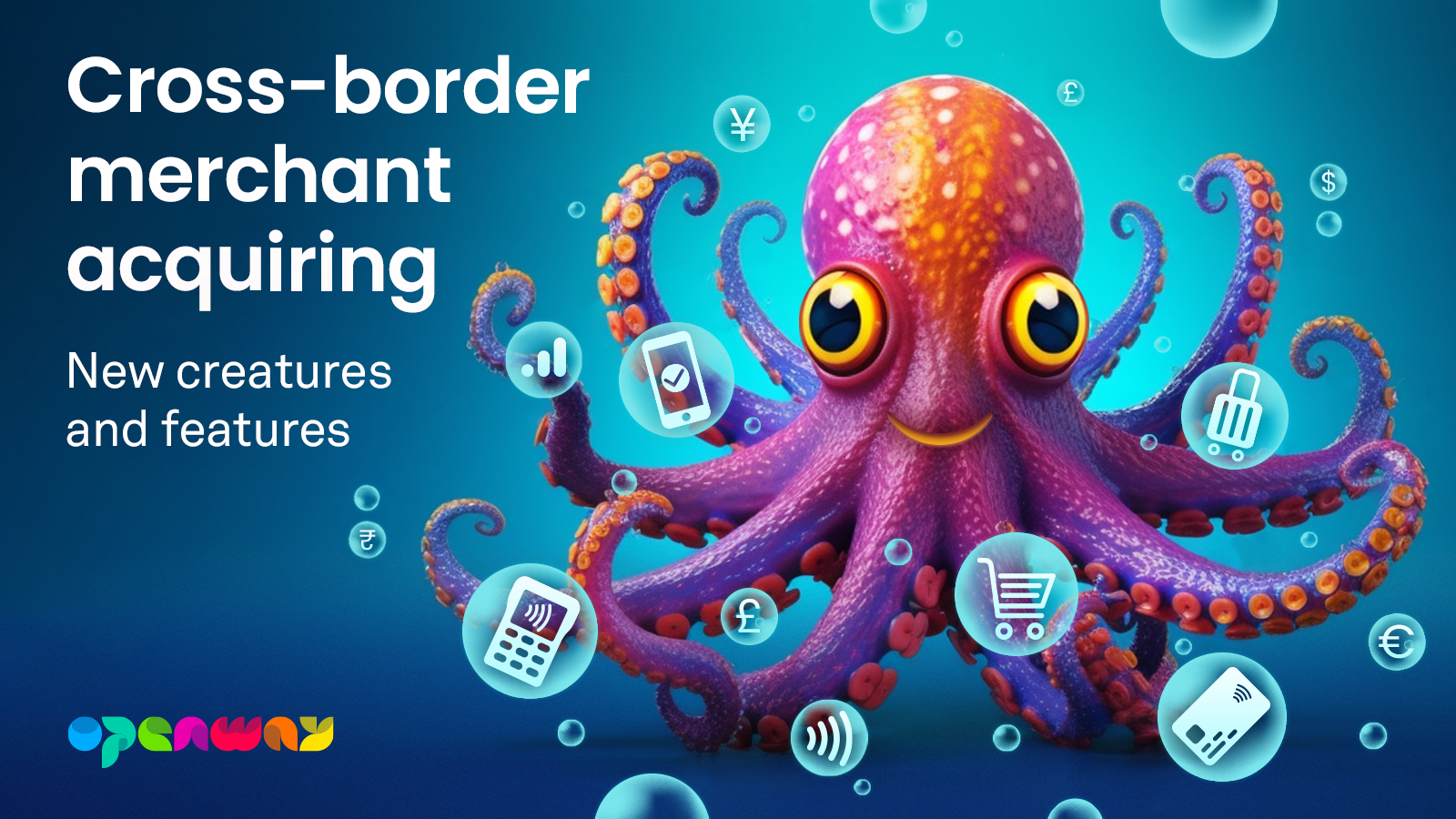
Cross-border merchant acquiring: it takes an octopus to thrive in rough waters
Rudy Gunawan
Rudy Gunawan is the Managing Director of OpenWay Asia, the top-rated vendor of the Way4 digital payment software platform. He has been active in the payment industry for 20 years, serving as a consultant to businesses in the Middle East and Asia Pacific. In his current leadership role at OpenWay, he oversees the company's operations in Asia while promoting the board's strategic initiatives.
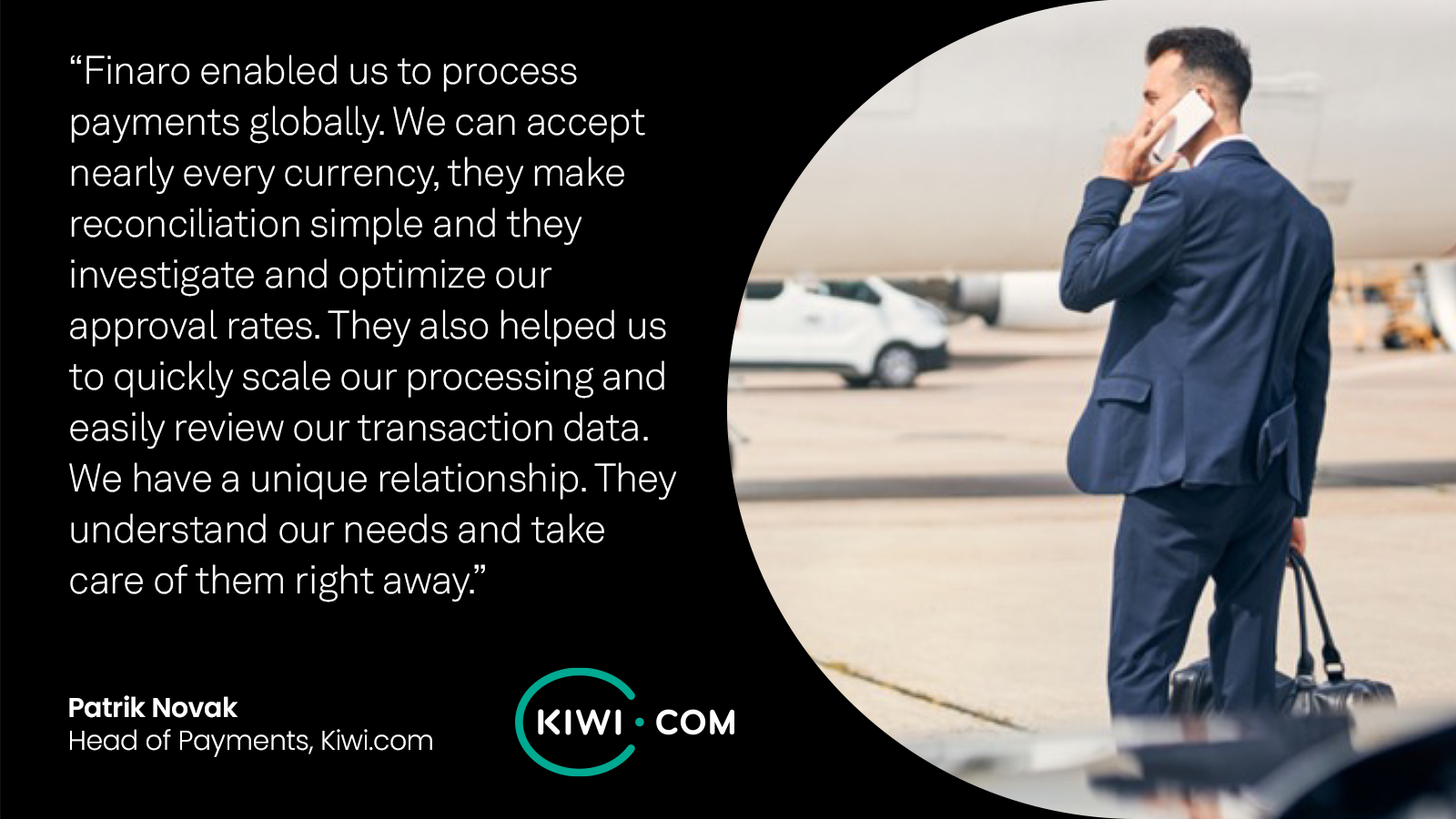
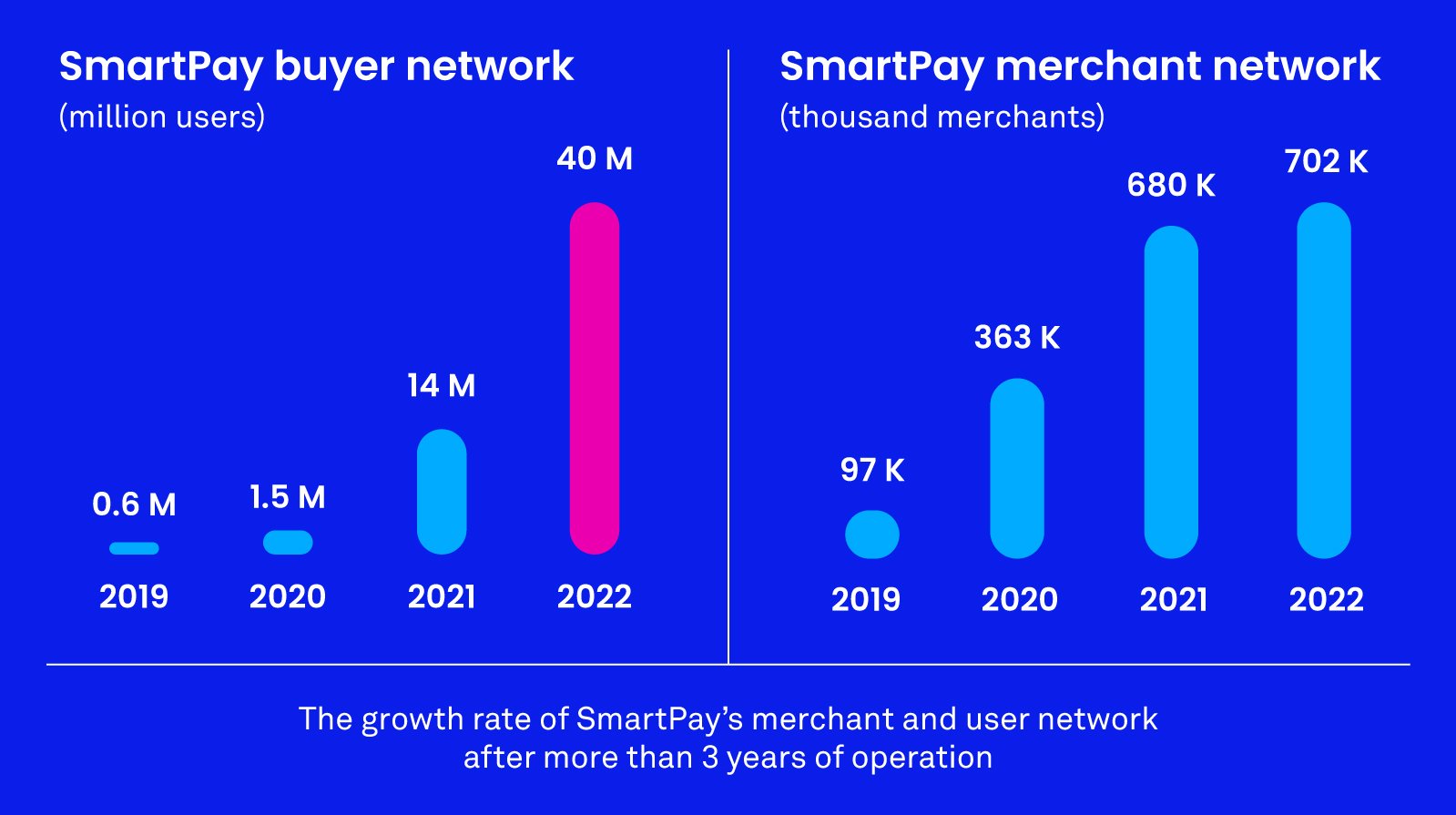
Table of contents

New trajectories in the merchant acquiring value chain

Cross-border merchant acquirers are busier than ever after the pandemic accelerated e-commerce worldwide. Moreover, they are getting a boost from global tourism, which is now “on track for full recovery” in 2023, according to the international arrivals data of the United Nations World Travel Organization.

Despite market growth, the competition for cross-border payment processing remains intense. This is partly due to the proliferation of startups, and also because incumbents are challenged by former partners such as ISVs, ISOs and PSPs that have become licensed as acquirers. These entrants may already possess specific strengths in certain niches. For example, due to compliance regulations, ISOs have stronger ties to high-risk merchants than acquiring banks. Similarly, ISVs have been increasing pressure on acquirers’ margins in the SME segment. 

At OpenWay, we have analyzed the technology choices and growth priorities that have helped our clients to safeguard their merchant portfolio from both traditional and emerging competitors alike. Our case study explores the best practices of these award-winning cross-border acquirers:

  • Nexi, a Pan-European acquirer, is undergoing an agile digital transformation, to ensure fast time-to-market, product flexibility and quick deployment across all service points. In 2020, despite all the complications of lockdown, it migrated over a million merchants to a single in-house Way4 installation.

  • Finaro (now part of Shift4) transformed from an e-commerce gateway in the Mediterranean into a global acquirer, issuer, and provider of merchant banking services. In 2022 it was acquired by Shift4, the payments partner of SpaceX.

Kiwi
Kiwi.com, a European travel aggregator, metasearch and booking engine for airline tickets and ground transportation, is one of 5,000+ merchants served by Finaro
  • Halyk Bank in Central Asia expanded from classic POS acquiring to encompass QR payments for SMEs serving tourists.

  • Planet Payments (formerly Fintrax) started as a PSP offering Dynamic Currency Conversion for luxury brands like Gucci, Chanel, and Burberry, and later became a full-fledged POS acquirer.

  • A payment facilitator from CNBC’s Disruptor 50 List grew from a provider of purchasing cards and payout services for marketplaces into a B2B acquirer operating across 190 countries.

  • SmartPay in Vietnam enabled SMEs to accept wallet payments and grew its portfolio to 700,000 merchants in just 3 years. Today, the SmartPay mobile wallet is predicted to become a super app, and connected merchants already have access to in-app value-added services, including BNPL and insurance.

info3
Source: SmartPay’s interview for CafeF e-magazine in February 2023
  • Equity Bank in Kenya was the world’s first ATM acquirer of M-PESA e-money. Today it is known as a wallet payments hub for various e-money brands across East Africa. 

Your cross-border acquiring platform versus a tame octopus: spot the difference

McKinsey’s 2022 report on payments disruptors concludes that merchant acquirers should prioritize value-added services and omnichannel commerce, and they “must act quickly to retain share”. However, a quick rollout of expected innovations is challenging for companies burdened by rigid and uncoordinated legacy systems.

What does it take to stay agile and efficient in the rough waters of cross-border merchant acquiring? An acquirer needs a unified platform that enables centralized real-time management of multiple channels, payment methods, currencies, and interfaces to international and local payment schemes – much like the way an octopus coordinates its many arms. We at OpenWay have created a figurative tame octopus for our clients: our top-rated Way4 digital payments software platform.

Giuseppe Dallona
Giuseppe Dallona CIO Nexi
“Way4 addresses our need for fast time-to-market and large target volumes. The system architecture allows us to centrally manage all our operations, launch innovations and sustain transaction volume growth. We enjoyed a wonderful collaboration and built friendships with OpenWay's incredible engineers.”

Our team proactively adds support for emerging payments methods and channels, helping acquirers stay one step ahead of competition. For instance, Visa Alias is a money transfer service where a recipient is identified by an alias – most commonly, a mobile number or nickname. It was first launched by banks in Peru in 2020 and proved popular, so it was enabled in Way4 in the end of the same year. Acquirers using the Way4 platform can process these transactions whether they originate from mobile, web banking, ATM, or self-service kiosk. When the sender types in the alias, Way4 displays the recipient’s name and the issuing bank’s brand. Thanks to this extended data, senders can be sure that they are crediting the correct card.

After Peru, the Visa Alias program became available in Ukraine and Uzbekistan, and it is likely to be promoted in other countries. This holds promise for the cross-border remittance industry. Furthermore, since the Way4 platform can link any PAN number with an alias, acquirers can leverage this functionality for cards of other payment schemes.

Octopuses are known as experts in camouflage, and each arm can mimic its surroundings. Similarly, Way4 applies region-, vertical- and merchant-specific rules to each transaction in real time. These rules cover online authorization, dynamic pricing, anti-fraud, KYC, chargebacks, and many other workflows.

Including country-specific steps in the processing scenario can also be a matter of compliance with regulations. In some European countries our clients have configured Way4 to check if a P2P sender or recipient belongs to a P2P fraud database managed by Central Bank. If a match is found, the transaction is declined immediately, as required by local regulations. Besides, allowed transfer limits may vary depending on the country and even on what type of acquirer you are.

Payoneer
Scott Galit CEO Payoneer
“We operate under different regulatory frameworks in different geographies. In Hong Kong, we have a money service operator license. In Japan, it’s a funds transfer service provider license. In Europe, it’s an e-money institution, which also incorporates payment services. In the US, it’s an MSB. So it’s different in different places around the world.”

Just as an octopus’s 500 million neurons are busy scanning the environment, an advanced payment processing engine should be capable of analyzing all types of data, both real-time and historical. This is an essential requirement for dynamic application of optimal scenarios and delivering targeted value-added services to merchants at the moment they are needed. For example, while processing cross-border fleet payments, acquirers using Way4 can differentiate between fuel and snack purchases, and activate specific rules that make sure drivers stay within the purchase limits of their employers.

Merchant pricing and billing – personalized, transparent, and data-driven

Personalized payment acceptance cost is a strong competitive advantage, yet achieving this is a challenge for cross-border acquirers. In Europe and North America, acquirers must offer the interchange++ pricing model to remain attractive to merchants. In other regions, blended pricing is more common. Also, individual preferences come into play: some merchants value transparency above all and want see the “++” markups in acquirer reports, while others choose fixed per-transaction rates to ensure more predictable monthly costs.

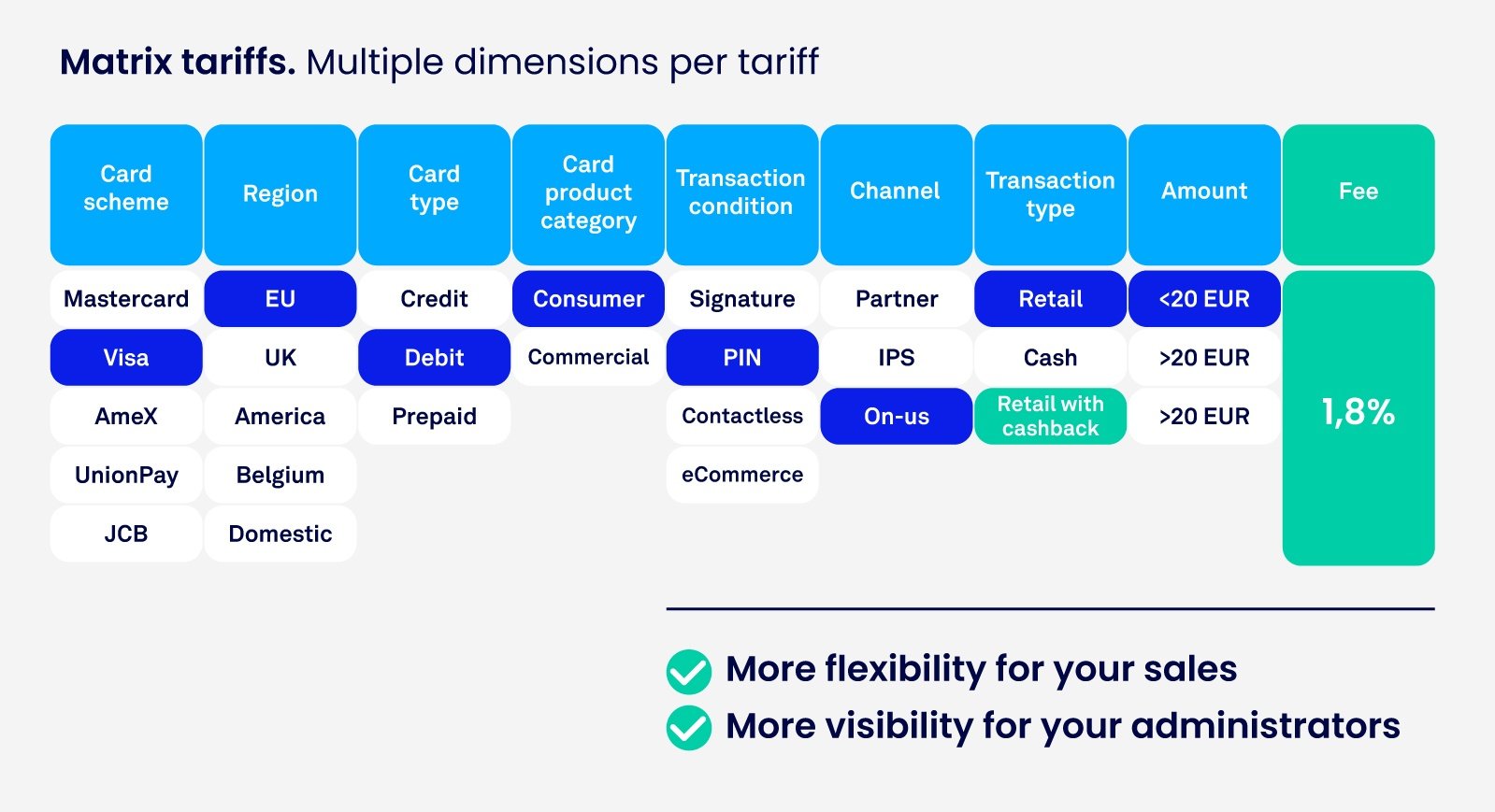
Acquirers using Way4 gain support for both pricing models. Furthermore, they can configure various rules that allow them to apply an optimal rate to each transaction in real time based on a range of parameters. Way4 can classify transactions by multiple dimensions, including the payment method, transaction condition, and channel. This matrix-like setup is easier to understand for merchants.

multi-dimensional-pricing_Way4
The example of multi-dimensional pricing setup in Way4 

Way4 feeds real-time data, including transaction parameters, processing results, and applied fees, to various systems and interfaces used by the merchant and the acquirer’s staff. This ensures a high level of transparency for all parties involved. The extracted data set can be flexibly configured based on the merchant’s country to facilitate preparation of statements that comply with local regulations, and to generate other customized reports according to merchant preferences. Merchants can also choose between gross and net settlement.

Those who provide acquiring services to large cross-border retailers, OpenWay clients among them, have found it convenient to organize all merchants of a retailer into a hierarchy. They first configure pricing, accounting, billing, and reporting rules for the entire merchant group, then personalize conditions for selected locations. When new regulations specific to a particular country are adopted, Way4 makes it quick to modify conditions for a selected regional branch and all merchants linked to this branch within the hierarchy.

In case of multi-store restaurant chains, acquirers may need to be flexible in how they configure billing cut-off rules. For example, a retail chain may own an eatery in a suburban food court that doesn’t generate transactions outside of regular work hours, and a standard cut-off time is suitable here. But the same chain might own a restaurant on a busy tourist street in a never-sleeping downtown. In this case, Way4 could enable a personalized cut-off time scheduled for after midnight for this selected restaurant.

To incentivize merchants who generate substantial profits, some of our clients offer them dynamic discounts. When a merchant’s transaction volumes in a given period surpass a specified threshold, Way4 activates a lower MSC rate. This threshold can be quantitative, based on a required number of transactions, or monetary, based on the required turnover amount. The transaction volume can be split into ranges, each with its own rate. If necessary, the threshold and discount can be made applicable exclusively to transactions of a specified type.

Way4_merchant_acquiring_Dynamic_pricing-1

Acquirers using Way4 can also support different accounting and billing options for what is known as merchant surcharge, a type of fee charged to cover a merchant’s processing costs. It is calculated on the merchant side and charged from the consumer. Way4 checks in real time if a transaction is eligible. For example, Canadian merchants may add surcharge to their card payments, excluding merchants in the province of Quebec.

The diverse array of pricing, billing, and reporting options available in Way4 provides both acquirers and merchants ample space for negotiation and makes it easier to find a win-win solution in terms of profitability.

Value-added services for the most attractive merchant segments

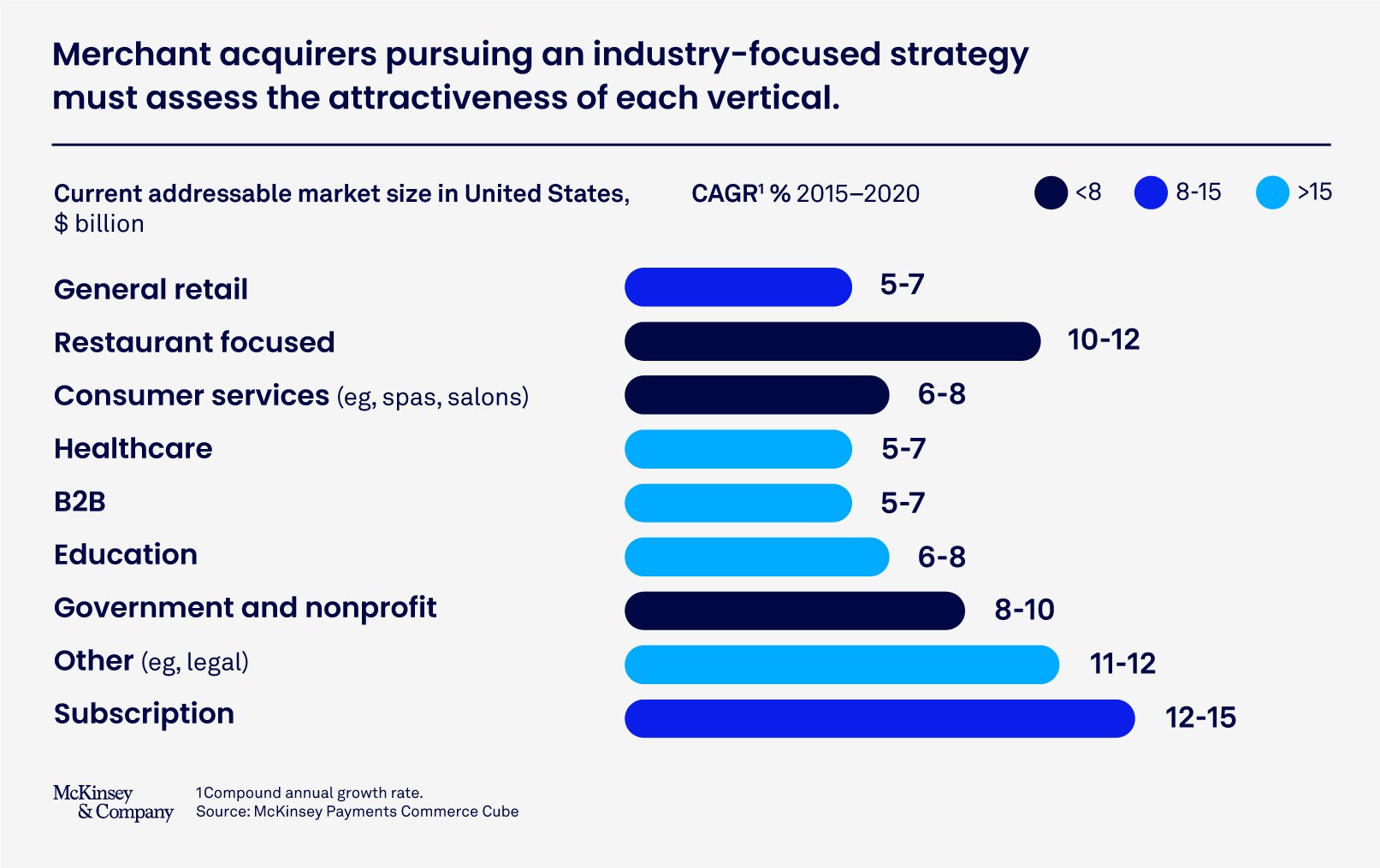
The attractiveness of different merchant segments varies across geographies and over time. Cross-border acquirers first need to do research to develop a roadmap of value-added services that is optimal for each region. They gain a significant advantage if their acquiring platform already supports the options most desired by their target merchant segments.

merchant-segments-share_McKinsey

All acquirers processing subscription payments on Way4 reduce the number of chargebacks thanks to the account updater service. It allows merchants to process Visa and Mastercard account-on-file transactions and recurring payments on renewed or replaced cards without interruption, and to get earlier notifications concerning the card closures.

The acquiring of social welfare cards for government and non-profit projects can be a business opportunity with many benefits. Enabling subsidized purchases helps businesses to position themselves as socially responsible and strengthens their ties with local authorities. Way4 uses level 3 data analytics to detect subsidized items like medicine or childсare products in the shopping cart and dynamically apply discounts. The acquirer can also configure a lower MSC fee for such transactions, in the event that their own costs are partially reimbursed by a government agency.

The segment of high-end restaurants and consumer services expects the support for functionalities such as bill splitting and digital tipping. The latter is especially important for cross-border transactions, as foreign tourists without cash may feel embarrassed if they can't leave a tip. Next time they may consider staying in another hotel or dining in another restaurant where they can tip digitally on POS.

The Way4 platform integrates these functions seamlessly into a standard card payment process. The customer enters the tip amount on POS and completes the transaction as usual. Way4 directs all tip payments to the dedicated accounts of service workers such as waiters, hairdressers, beauticians, hospitality workers, and others. The earned tips can be transferred to the worker’s own bankcard immediately after each transaction or as a total sum at the end of the working shift. If necessary, the acquirer can set up a fee to be deducted from the transferred amount.

For SME food merchants, especially in Asia, acquirers should rather prioritize other value-added services. Lawrence Chan, a payment executive recently interviewed by McKinsey, observed: “In Singapore and other places where we have hawker food — and potentially wet or oily fingers — we’ve seen that QR payments, which don’t require anyone to touch a device, have really helped the user experience for both the seller and the buyer.”

QR
Thanks to QR payments, tasty food and oily fingers are no obstacles to a smooth payment experience. Photo: Adam Friedlander

Quite often, hawker vendors themselves come from low-income households, and a predictable cash flow is their only option to replenish their stock in time. To assist this merchant segment, acquirers can configure Way4 to support the instant settlement option.

According to McKinsey’s Global Payments Map in 2021, cross-border marketplace payouts accounted for as much as $200 billion in flows and generated $3.5 billion in revenues to intermediaries, and was expected to keep growing by 20-30% each year. McKinsey added that “seller-enablement solutions such as instant payouts and seller financing represent a large and underserved value pool that acquirers can access.”

To help our clients become more competitive in this booming niche, Way4 enables instant merchant settlement and partial payments for split shipment orders. It also offers various options for merchant financing such as revenue-based loans. Merchants can apply for this loan online and go through a checking process by the acquirer before being granting approval. A merchant who takes out a loan will be charged repayments each month for an amount that is proportionate to its revenue for that specific month. The acquirer can readjust the terms of the loan - for example, offer refinancing or payment holidays for selected debtors.

Technology that increases approval rates

Merchants generally expect that their approval rates will stay above the industry average. For most transaction types, the average approval rate is publicly available. For example, Visa benchmark reports provide rates by MCC (merchant category code) and by country.

Acquirers on the Way4 platform both meet and exceed their merchant’s expectations. This is evidenced by the well-known e-commerce success of Finaro, known for its remarkable “best conversion rates ever ”. Way4 plays a pivotal role in this success in multiple ways.

First of all, the Way4 acquiring platform possesses a fail-safe architecture that is resilient to regional infrastructure malfunctions and shutdowns.

Ilya Dubinsky
Ilya Dubinsky VP CTO Office Finaro
“We have a distributed infrastructure, with active-active data centers that provide services from two different points globally. It contributes to the payment speed, because wherever the merchant is located, they get the local connection. One of the things that powers it is the high availability framework that we have on the Way4 platform.”
We have long implemented high availability and geo-clustering for Way4, ensuring its robustness . The platform also supports acquirers who have decided to take a new approach and leverage a cloud environment. Factors contributing to the resilience of processing infrastructure and other relevant topics are explored in depth in our recent article, Powering Digital Payments in the Age of Pandemics and Other Disasters.

Secondly, Way4 allows acquirers to configure smart routing rules based on dozens of parameters. Even if a transaction is initially rejected, attempts will be made to reauthorize it through other appropriate routes. If the number of rejections is much higher than usual, the platform can send alerts to the acquirer’s staff, who in turn may perform quick manual troubleshooting so as to minimize impact on approval rates.

It is also important to optimally format transactional messages so the issuer will recognize and accept the transaction. For example, MOTO payments should be marked with a specific flag to indicate that they are an exception to 3DS protocol, preventing declines caused by missing 3DS data.

Way4 can stream various payment processing details to the acquirer’s data lake, both for real-time analysis and for generation of reports over a period of time. This raw data can be used by the acquirer to analyze rejection patterns per merchant, channel, card type, and other parameters, and apply findings to processing rules in order to further improve approval rates.

Personalized multi-currency pricing, flexible FX markups, and FX profit sharing

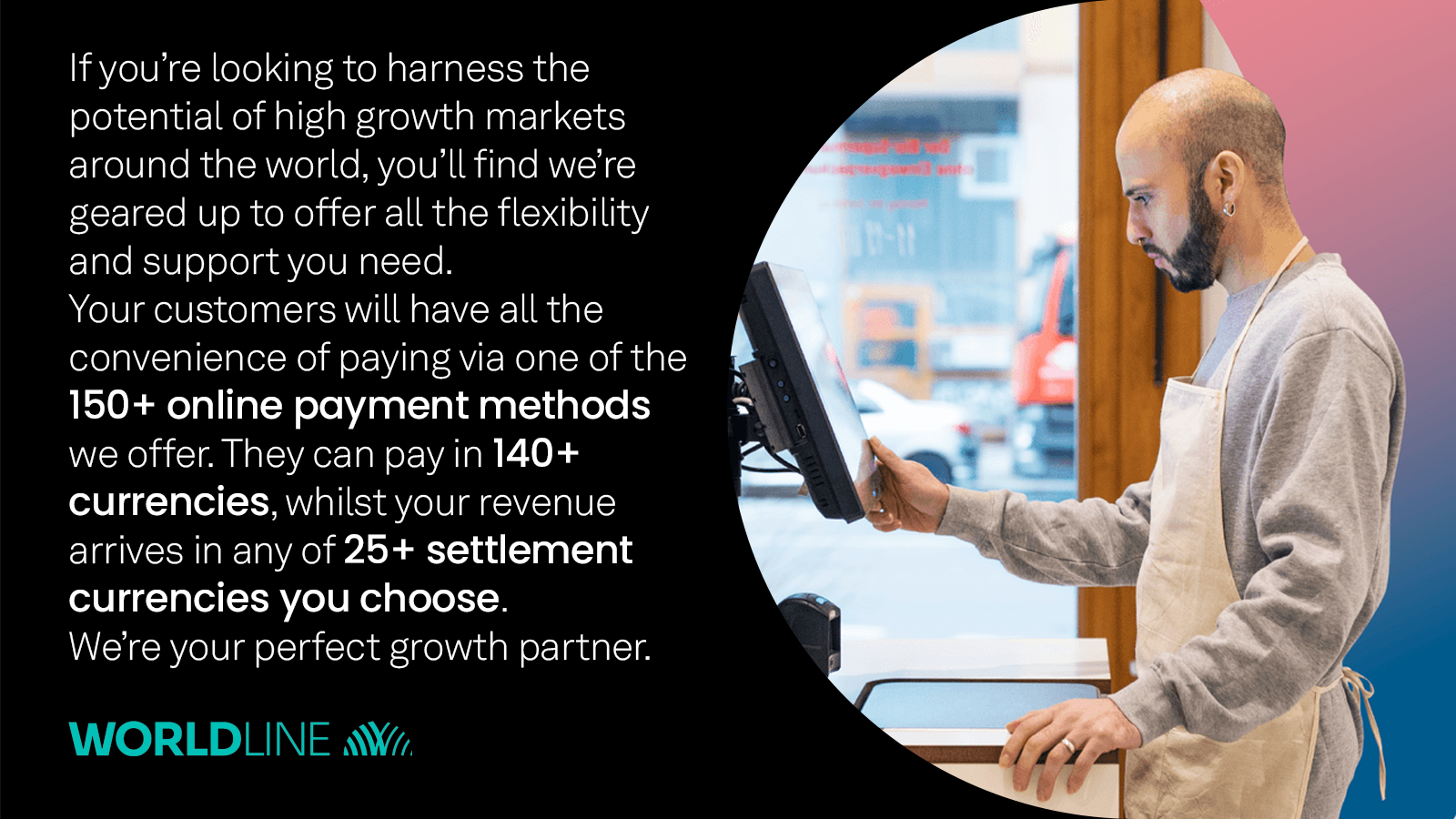
Multi-Currency Pricing (MCP) service, thanks to which merchants receive settlement in their preferred currency, has long been available and is no longer a competitive advantage in itself. Leading cross-border acquirers are already working with dozens of settlement currencies. This prompts ambitious smaller players to gradually expand their own currency list.

Worldline
Worldline can boast one of highest number of supported currencies, both for DCC and MCP

OpenWay clients have many options for multi-currency services in Way4 to meet merchant expectations, from the typical to the unusual. Moreover, Way4 contributes to FX profitability by the use of various FX markups.

As an example, suppose a merchant prefers settlement in USD when shoppers pay in INR; settlement in GBP when shoppers pay in EUR; and for JPY payments, settlement in the same currency. For each merchant, Way4 stores an unlimited number of merchant-preferred predefined currency pairs, each with its own FX markup.

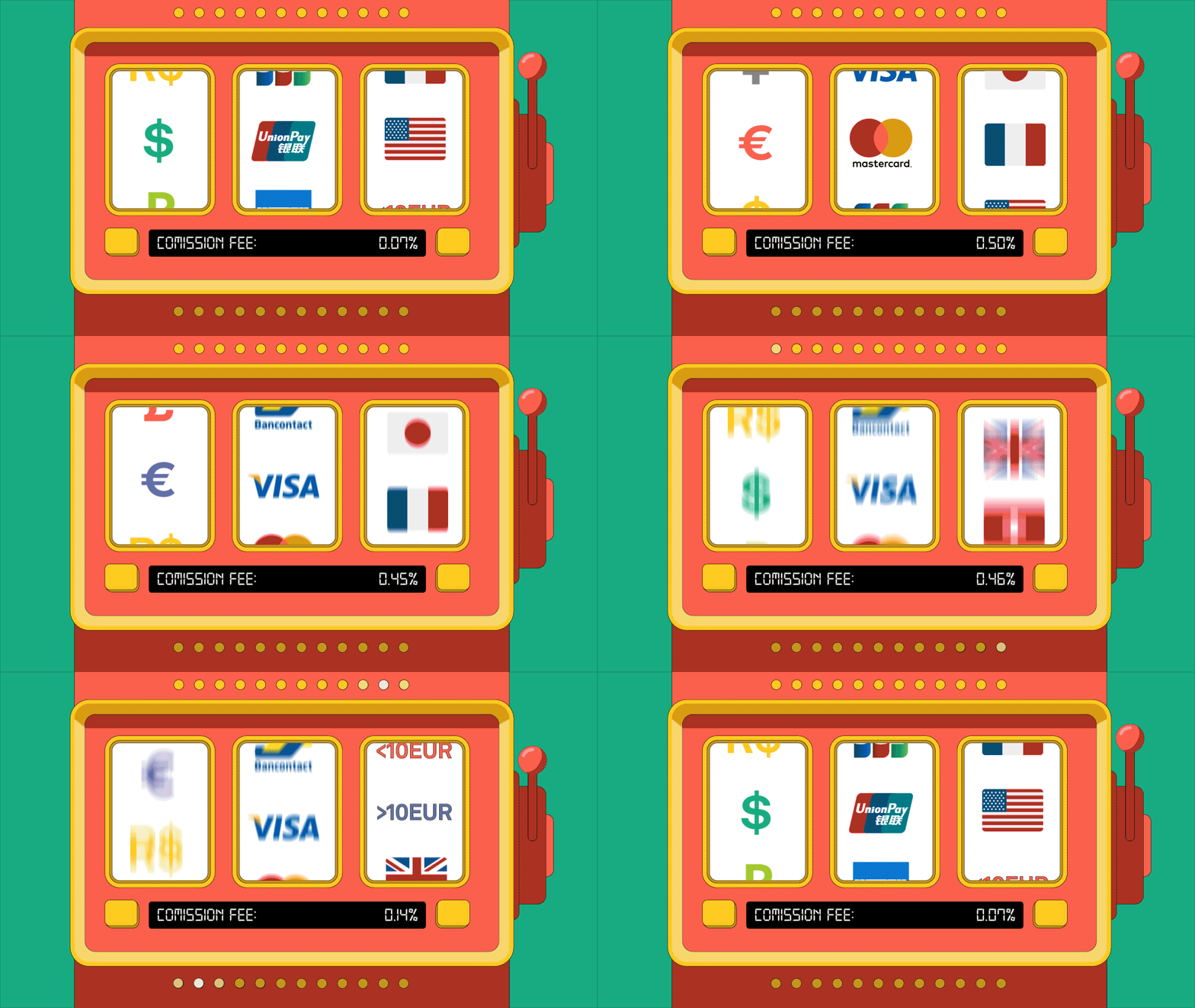
Alternatively, the acquirer can use a matrix-based setup of MCP conditions. Way4 will identify the settlement currency dynamically based on a combination of shopper’s currency, payment scheme, channel, region, and other transaction parameters. A unique FX markup may be applied to each parameter.

In all cases, Way4 facilitates transparent reporting by showing all applied FX rates and markups for each transaction. This helps acquirers to fulfill their promise of “no hidden costs”, which proves attractive to merchants.

multi-currency

To incentivize the most valuable merchants, acquirers on Way4 can offer to split the markup on FX conversion rates. Such profit-sharing agreements may be a true competitive advantage in cross-border acquiring. Way4 supports this model by automating the related accounting, billing, and reporting workflows.

How can acquirers make sure that the optimal FX rate is applied to each transaction from the start? Typically, Way4 preloads stock exchange rates from an external system of the acquirer’s choice and updates them as frequently as needed, and even in “near real-time”. The preloaded rates are dynamically applied to each transaction, along with the predefined acquirer markups for each rate.

Another option is to rely on online conversion. This approach is used by Equity Bank Group in East Africa for all its issuing and acquiring operations on Way4. Using Way4’s rich APIs, the bank leverages a real-time integration with a preferred FX partner.

Maximizing cost-efficiency and securing new revenue streams

Cross-border acquirers must manage various expenses related to payment processing. They are charged fees that differ across various card schemes and alternative payment methods. Regional differences complicate the calculation of these costs even more.

Finaro, for example, supports 150 card types and payment methods, and processes transactions for 5,000 merchants in 180 countries. Way4 proves invaluable to the company thanks to its automated interchange fee prediction, reconciliation, settlement, and reporting workflows. It calculates and displays transaction fees for multiple payment systems and countries of operation. This capability safeguards all OpenWay clients, both issuers and acquirers, against financial loss caused by miscalculated or rejected clearing amounts.

Our clients rely on Way4 to flexibly configure and automate many workflows including 24/7 digital merchant onboarding; cost-saving transaction routing; dynamic pricing; interchange fee prediction; mandatory IPS reporting; clearing and settlement across all involved card schemes and payment systems; disputes and chargebacks; real-time risk management; and more.

Operational costs and data management efficiency were among the major drivers for Tsesnabank (later rebranded to Jusan Bank) in Central Asia to migrate from BPC’s SmartVista platform and optimize all acquiring and issuing activities on the Way4 platform.

Balzhan Baisheva
Balzhan Baisheva Managing Director Tsesnabank
“Thanks to Way4, we got rid of a lot of unnecessary duplication, checks and business processes, and freed staff up from routine procedures. Now we have more time and capacity to develop the payment business. Regarding data analytics and business information (BI), the new platform allows us to store, systematize and retrieve customer and transaction data more easily. We can analyze historic patterns and forecast trends in a way that is critical for day-to-day product management, new product development and innovation.”

For Tsesnabank, migration between in-house platforms took just 4 months. Migration to Way4 in the cloud can be handled within the same quick timeframe. Also, in cooperation with OpenWay and its partners, Way4 may be deployed as a dedicated SaaS installation. By outsourcing all technical routines to OpenWay, the acquirer team can focus even more on its core business.

Apart from optimizing their payment processing workflows and infrastructures, our clients continuously improve the profitability of their merchant portfolio. Although experienced acquirers possess reliable, AI-based merchant assessment algorithms, the occasional onboarding of unprofitable customers is inevitable. Payoneer, for example, receives over 300,000 applications a month from all over the world. With such volumes it is an impossible task to predict with total accuracy which applicants will generate losses in the long run, so it is crucial to detect weak spots and frequently readjust pricing strategies.

For profitability analysis, Way4 provides various options including data streaming to the acquirer’s external analytic and reporting systems. To learn more about related best practices, explore our case study Merchant Acquiring Profitability: a Piece of Cake or a Pig in a Poke?.

There are more ways for cross-border acquirers to monetize their existing portfolio. Merchants surveyed by McKinsey expressed demand and readiness to pay for a variety of solutions: payroll tools – 31%, access to borrowing – 31%, and BNPL – 26%. By enabling new modules and features on the Way4 platform, our clients can quickly roll out these offerings. They can start issuing expense cards for merchant employees, offer turnover-based loans to merchants, and embed multiple buy-now-pay-later options into POS and e-commerce checkouts. Noteworthy is the recent selection of Way4 as a flexible BNPL engine by LOTTE, a Korean brand, who then entered Vietnamese market as a BNPL disruptor with near-instant loan approval for e-commerce.

Mr. Kim Jong Geuk
Mr. Kim Jong Geuk CEO LOTTE Finance
“It was important for us to find a technological solution that would allow us to implement LOTTE Finance’s best practices in developing lifestyle financial services while taking into account the requirements of large online retailers in Vietnam for a seamless checkout experience. The Way4 platform satisfied all our requirements for solution design and our available use cases.”

It also makes sense for cross-border acquirers to step into multi-currency ATM acquiring, also supported on Way4. An acquirer can reach mutually beneficial agreements with its merchants to place ATM terminals in retail locations visited by large numbers of tourists.

Whether you are launching cross-border acquiring from scratch or expanding your existing business, our Way4 innovations and expertise can be the perfect match for your goals. You are most welcome to contact our team, and together we can brainstorm how merchants worldwide will embrace and appreciate your payment services!

Ilya Dubinsky
Ilya Dubinsky VP CTO Office Finaro
“For people to like payments, payments should become invisible. They should be very fast, reliable and secure. And I think that’s what we are doing. Some of these goals are achieved because of our superior infrastructure, others because of different value-added services that we provide to the merchant to help them achieve that convenience and security.”

Learn more: analytic reports, news and case studies

  1. Merchant acquiring at the crossroads: An industry reinvents itself”. Interview by McKinsey. September 22, 2022. Accessed June 15, 2023.

  2. Merchant acquiring and the $100 billion opportunity in small business”. Article by McKinsey. October 11, 2021. Accessed June 15, 2023.

  3. Enabling global commerce: A conversation with Payoneer CEO Scott Galit”. Podcast by McKinsey. December 10, 2021. Accessed June 15, 2023.

  4. Finaro: Making Payments Likeable with Way4”. Finaro’s video interview at OpenWay Club 2021. January 27, 2022. Accessed June 15, 2023.

  5. LOTTE Finance and OpenWay Introduce New BNPL Service to Vietnam”. Press-release by LOTTE Finance and OpenWay. October 19, 2021. Accessed June 15, 2023.

  6. Omnichannel: How Top Acquirers Give Merchants What They Want”. Case study by OpenWay. August 22, 2022. Accessed June 15, 2023.

  7.  “Merchant acquiring profitability: a Piece of Cake or a Pig in a Poke?” Case study by OpenWay. September 7, 2021. Accessed June 15, 2023.

  8. Merchant Acquiring Strategies: Adapt and Grow in Challenging Times”. May 20, 2020. Accessed June 15, 2023.

  9. Visa Alias Directory Service. Simplify the push payment experience. Link and resolve an Alias to a payment credential”. Accessed June 15, 2023.

  10.  “Cross-border ecommerce worth 179 billion euros”. Ecommerce News. March 31, 2023. Accessed June 15, 2023.

  11. Mullen, Caitlin. “Fintechs gain ground in merchant acquiring”. October 3, 2022. Accessed June 15, 2023.  

  12. Hendry, Lisa. “Octopuses keep surprising us - here are eight examples how”. Accessed June 15, 2023.